
XINHUI GARMENTS / CUSTOM MEN’S STREETWEAR
CUSTOM
CUT-AND-SEW
PANEL T-SHIRT.
Let construction create the graphic. Develop curved panels, asymmetric color blocking and visible seam details in a custom men’s streetwear T-shirt built around your own pattern and fit.
AI-generated visual concept. Not a production sample, customer order or item available to purchase.
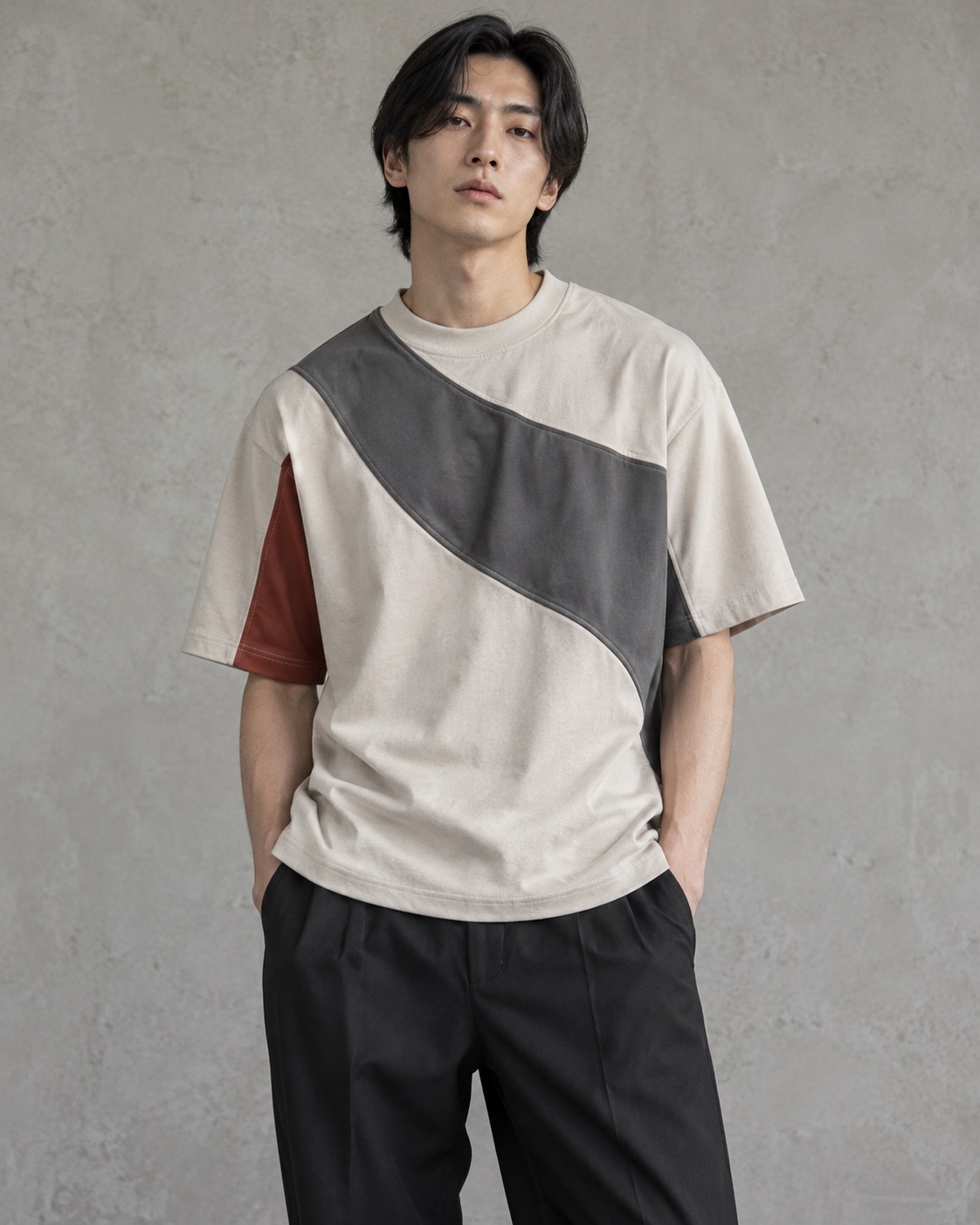
FRONT VIEW / DESIGN
BUILT
IN PANELS.
A graphic silhouette drawn through fabric and seams.
01 / 06
The pattern becomes the statement.
A broad charcoal panel sweeps across a chalk-ivory body, while a clay-colored sleeve insert introduces a smaller accent. The visual effect comes from separate fabric pieces joined together, giving the garment a sculptural direction without relying on a large printed logo. The relaxed body keeps the curved line readable. Your panel geometry, fabric mix and color balance guide development.
CONSTRUCTION FIRST
Each color area represents a cut-and-sew component. Panel placement must be defined in the pattern, not only in a mockup.
BRAND DIRECTION
Change the curvature, proportion and color mapping to develop a signature construction for your label.
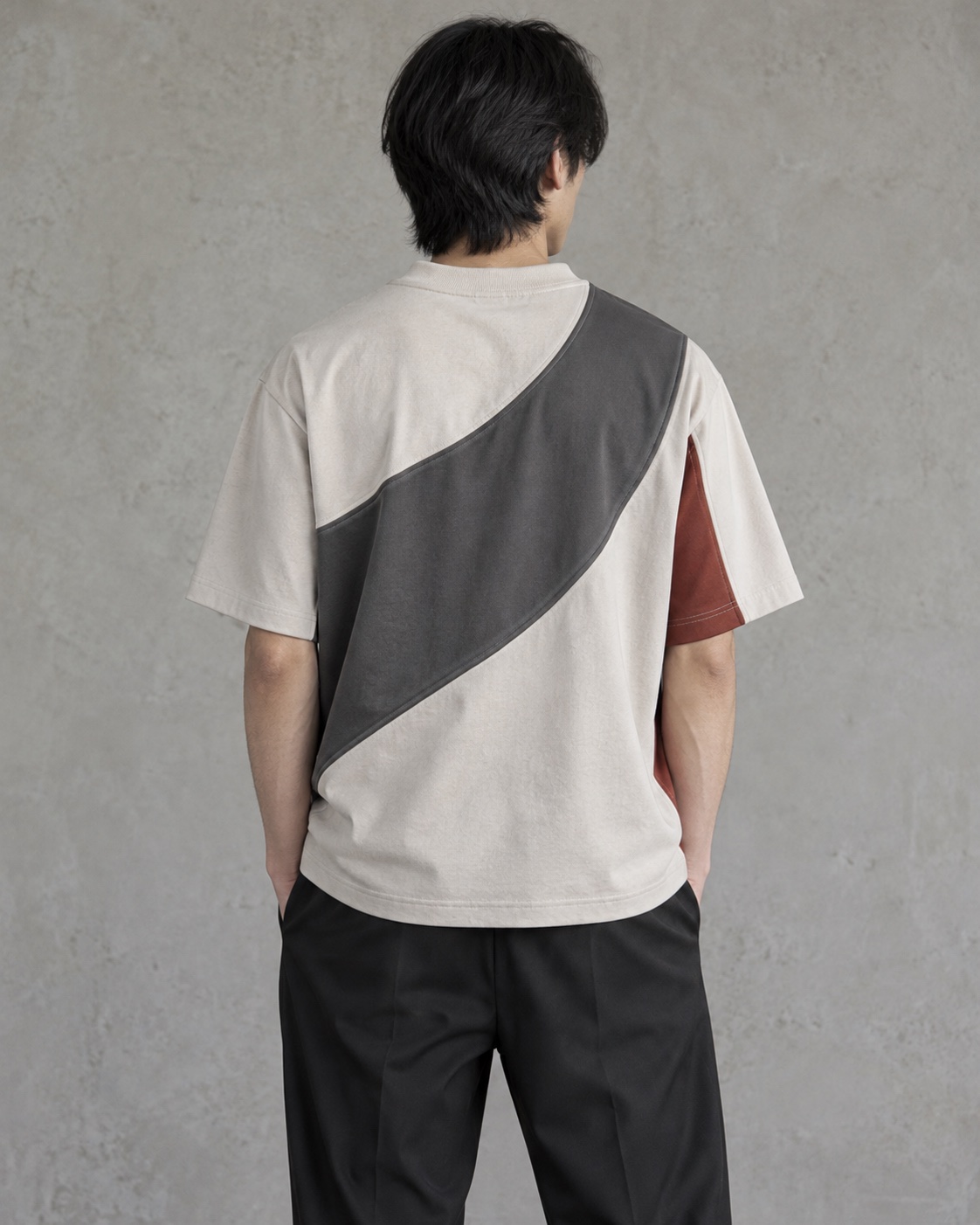
BACK VIEW / DETAILS
CONSIDER
EVERY ANGLE.
The reverse continues the construction in its own way.
02 / 06
Carry the line around the body.
The back uses a broad offset charcoal sweep with a quieter ivory field. It relates to the front while changing the direction and balance of the composition. Side-seam and sleeve-panel junctions should be considered together so the garment reads as one design from every angle. The exact continuity and matching points are confirmed in the technical drawings and sample.
SEAM JUNCTIONS
Mark where front and back panels meet at the shoulder, side seam and sleeve.
BALANCED REVERSE
Use the back drawing to approve the size and direction of the curved panel before pattern development.
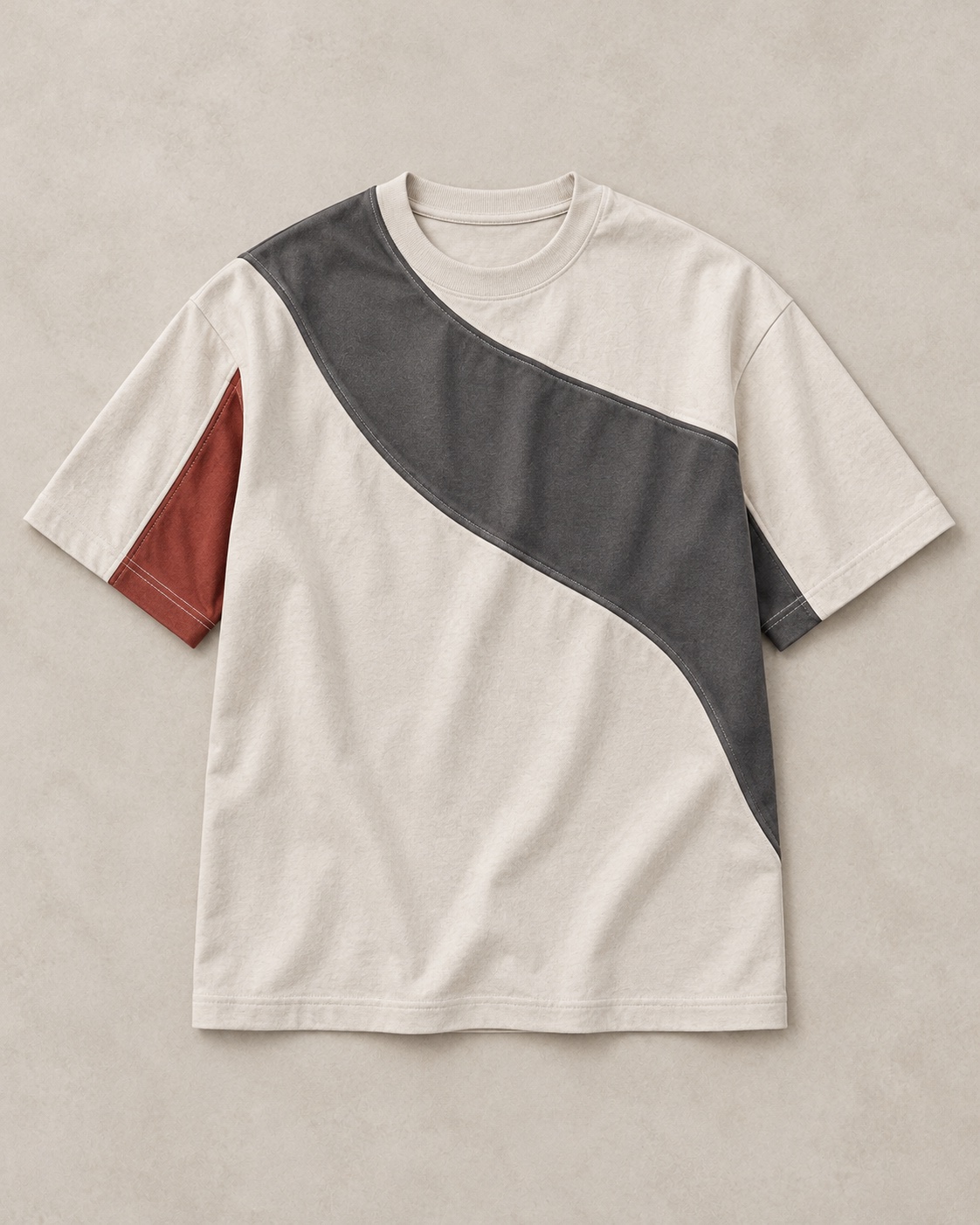
FIT STUDY / 03
CUT WITH
INTENTION.
- BASE FITSet chest, length and sleeve.
- PANEL CURVEPosition against the body.
- JOIN POINTSAlign the seam intersections.
- GRADINGPreserve the curve by size.
03 / 06
Fit the body before refining the curve.
The silhouette is a relaxed hip-length T-shirt with generous short sleeves and a defined rib neckline. Panel curves must sit correctly on that base fit; changing body width or length can change the entire visual balance. Develop and review the base measurements together with the panel drawing, then assess both on a worn sample. Grade the panel shape with the garment rather than simply stretching the artwork.
ON-BODY BALANCE
Check where the dark panel crosses the chest and side on your target fit model.
CLEAR SPECIFICATION
Provide seam measurements or pattern references as well as the finished garment size chart.
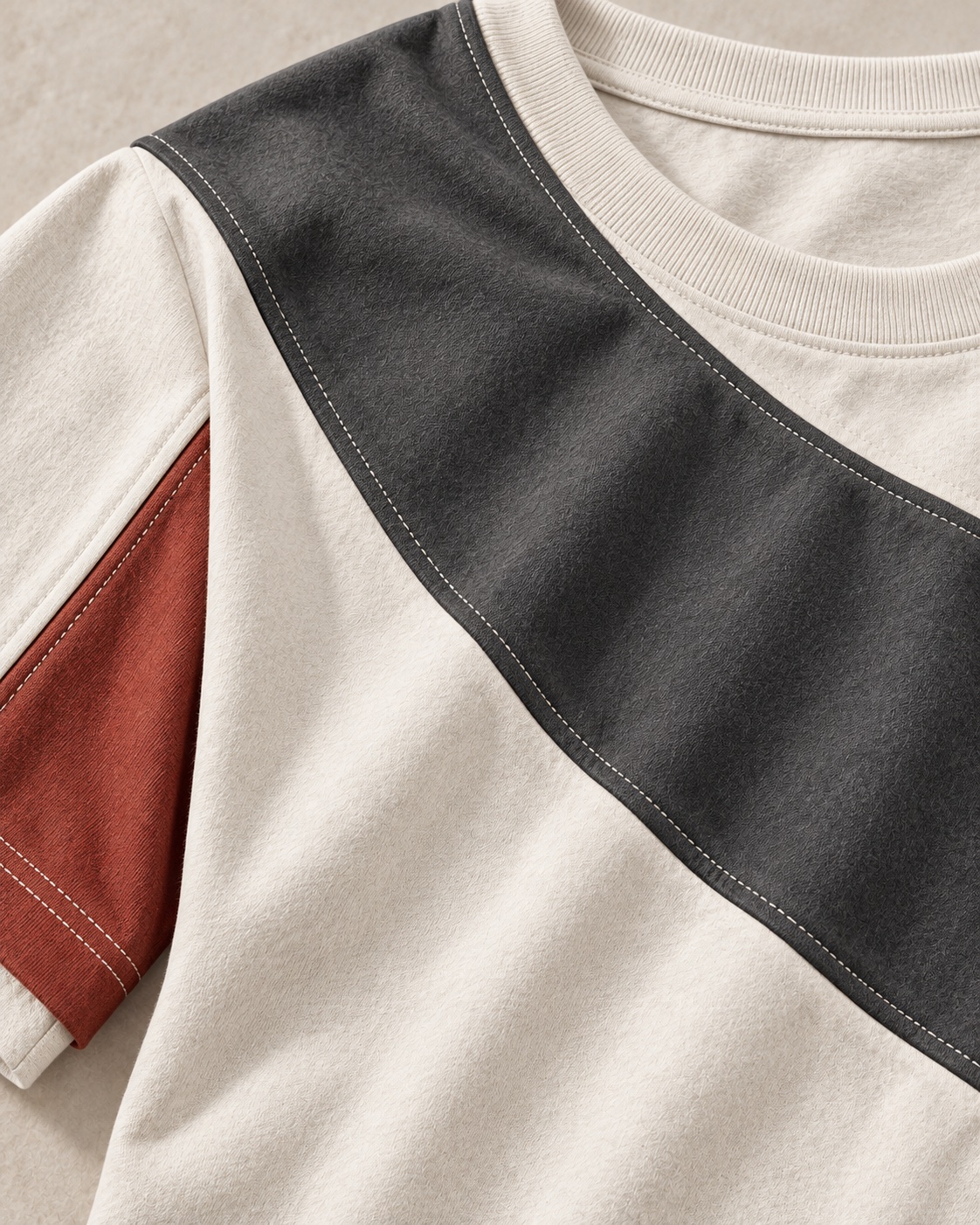
MATERIAL & CRAFT / 04
THE JOIN
MATTERS.
- CUTTINGAccurate curved pattern pieces.
- ASSEMBLYSmooth joins with aligned edges.
- FINISHINGTopstitch and inside seam review.
04 / 06
Clean curves need controlled sewing.
Curved seams require careful cutting, alignment and sewing so the panel lies smoothly. Fabric combinations should be checked for compatible weight, stretch and shrinkage. The visible topstitch adds definition but also makes uneven joins easier to see. During sampling, review seam allowance, stitch appearance, panel matching and the inside finish, then confirm the selected materials and construction for bulk production.
MATERIAL COMPATIBILITY
Different colors can use a matching jersey base; mixed fabric weights require additional sampling for drape and wash behavior.
QUALITY CHECK
Inspect seam puckering, distortion and alignment at the panel junctions, including after the agreed wash test.
ON-BODY / 05
SHAPE
WITHOUT NOISE.
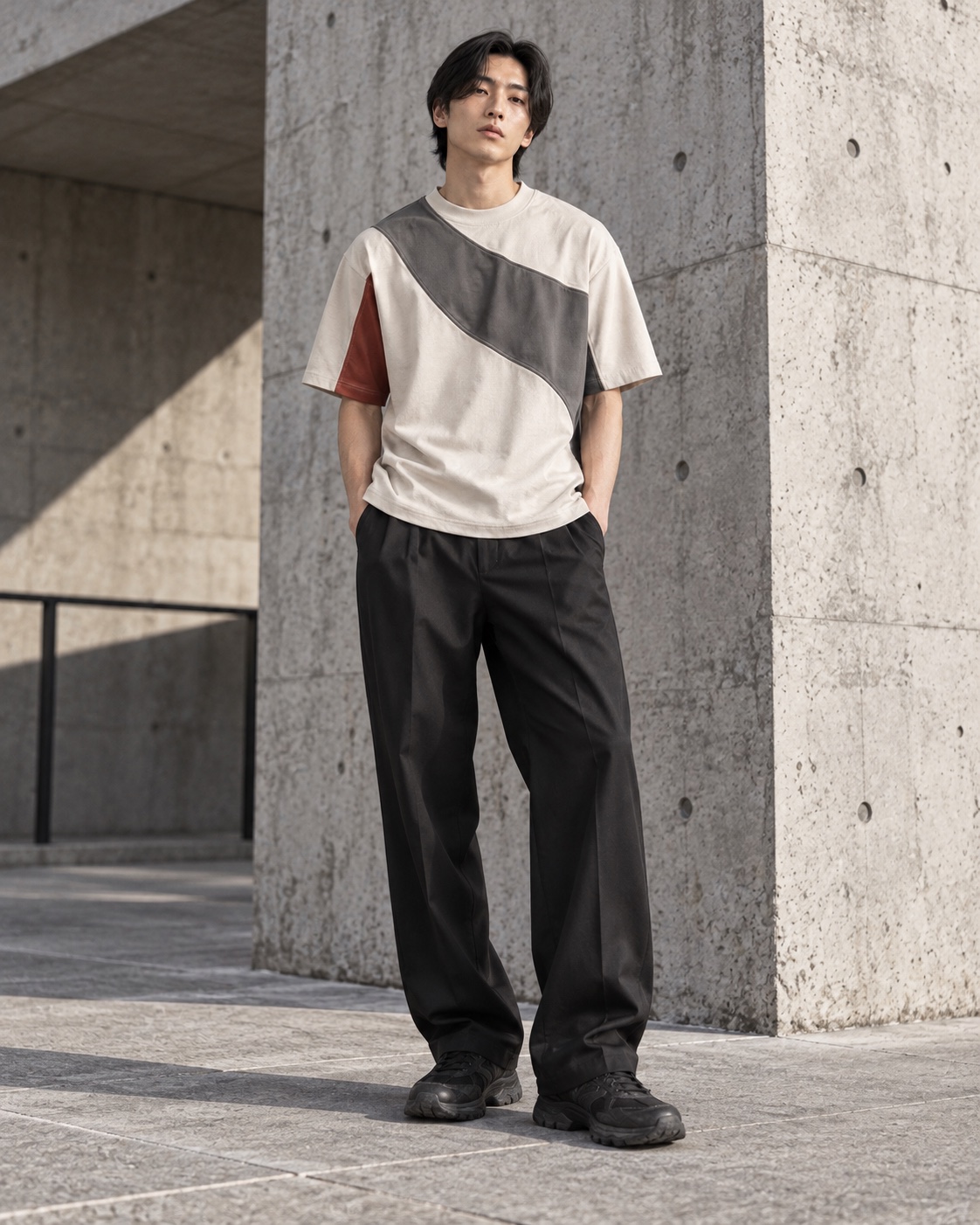
A clear cut-and-sew statement in a restrained palette.
05 / 06
Let the construction read in daylight.
The full-body scene shows how the charcoal curve creates movement across a simple outfit. A restrained palette and relaxed trousers keep the panel construction in focus. This direction suits a collection that wants a recognizable cut without depending on oversized lettering. The image illustrates the concept; the actual panel shape, fabric and fit are established through sampling.
COLLECTION USE
The panel language can be adapted across colorways while keeping the agreed pattern and fit consistent.
WEAR REVIEW
Look at the garment from the front, side and back to check how the curve changes with movement.
YOUR BRIEF / 06
FROM LINE
TO GARMENT.
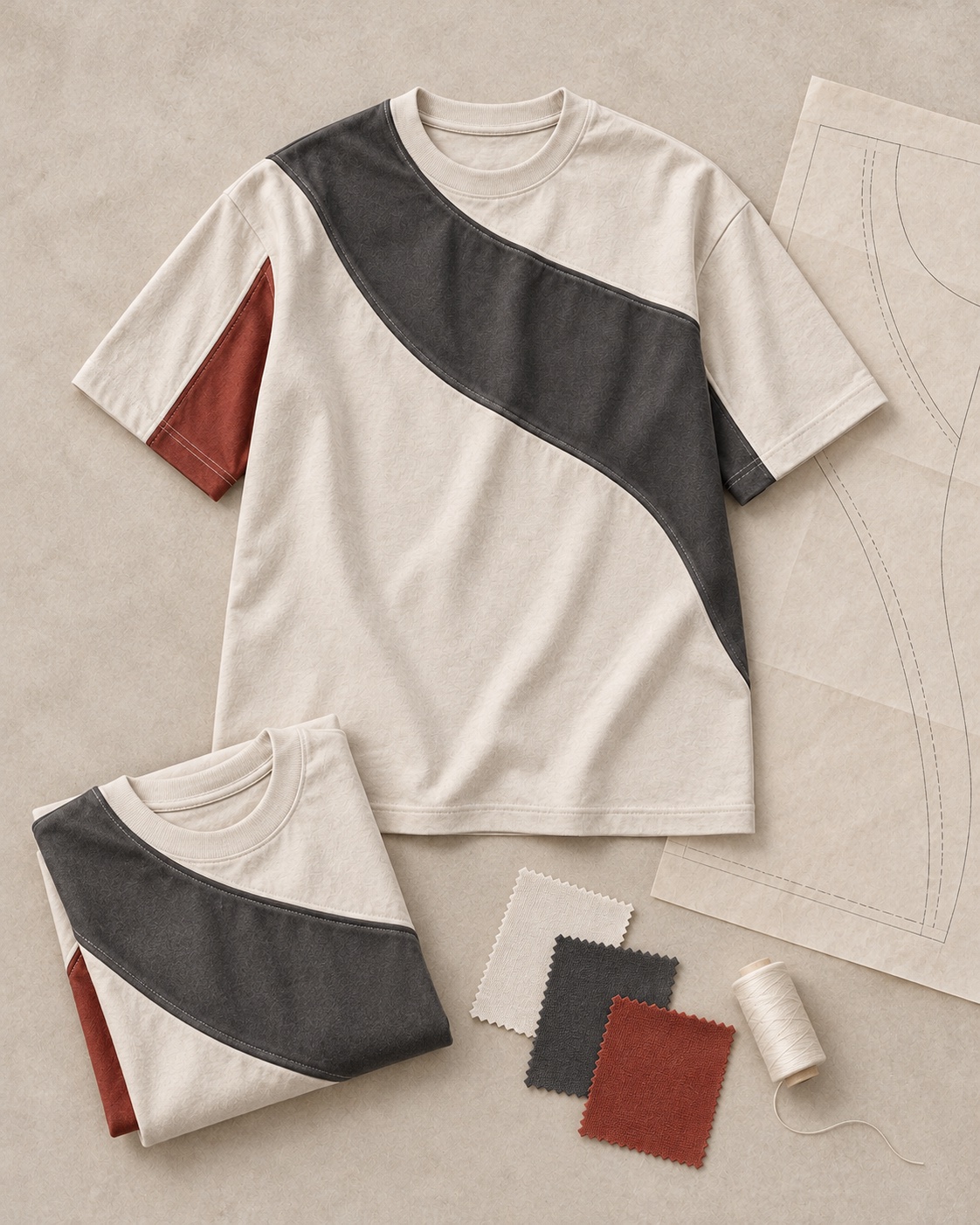
- 01 / DRAWINGSFront and back panel boundaries.
- 02 / FABRICSComposition, weight and colors.
- 03 / SEAMSJoin and topstitch details.
- 04 / FITMeasurements and size breakdown.
06 / 06
Bring the panel map to development.
Send separate front and back drawings with panel boundaries, color and fabric assignments, seam details and finished measurements. Include any pattern files or construction references you already have, plus labels, packaging, quantities and target timing. We review material combinations and sewing complexity before quotation. Approve panel shape, matching, seam finish and fit on the sample before confirming bulk specifications.
QUOTE INPUT
Panel count, fabric combinations and seam complexity affect the production assessment; a clear construction drawing helps us price accurately.
SAMPLE SIGN-OFF
Confirm the curved joins and size grading with the approved garment specification before placing the bulk order.
HOW CUSTOM STREETWEAR ORDERS WORK
FROM YOUR DESIGN.
TO YOUR DELIVERY.
For made-to-order streetwear, the path starts with your design files. We review your requirements, quote and make a sample for your approval before you confirm a bulk order.
- 01 / INQUIRY & BRIEF
Send your design and requirements.
Share your drawings or tech pack, preferred fabric and weight, fit, artwork files, estimated quantity and target timing. We clarify missing details before pricing.
- 02 / REVIEW & QUOTE
Get a project-specific quotation.
We assess fabric, construction, decoration placement and quantity, then quote from the submitted design and specifications. We also agree on the sample scope; later design changes may affect the final price.
- 03 / SAMPLE DEVELOPMENT
See the garment in real life.
We develop a sample to check fit, fabric feel, decoration placement, color and finishing. The stated sample lead time is 7–20 days, subject to the agreed sample brief.
- 04 / SAMPLE APPROVAL
Review, revise and sign off.
You check the physical sample and send feedback. We agree any revisions, update the production specification and obtain your approval before bulk production.
- 05 / BULK ORDER
Confirm the order details.
After sample approval, confirm the final quantity, color and size breakdown, artwork placement, labels, packaging, price, payment terms and delivery schedule in the purchase order.
- 06 / PRODUCE & DELIVER
Make, inspect and ship.
We prepare materials, cut, decorate and sew the garments, with photo and video updates at key stages. Finished goods are inspected, packed and handed over under the agreed shipping terms.
Timing note: Sample revisions can add time. The 7–20 day figure is for sampling, not bulk production or shipping. We confirm the bulk schedule after sample approval and order details are agreed.
CUSTOM PRODUCTION / OEM & ODM
TELL US ABOUT
YOUR DESIGN.
Share the essentials for your cut-and-sew panel t-shirt project: panel drawings, seam lines, fabric combinations, color mapping, measurements and branded finishing. We’ll prepare a WhatsApp message from your answers. A detailed quote follows review of your drawings or tech pack.
After WhatsApp opens, attach any design drawings, tech pack or material references you have in the chat. Files cannot be attached through this form.